K4GGWA Spatial Evidence Hub
Understanding, exploring and using spatial evidence for land health and restoration across the Great Green Wall
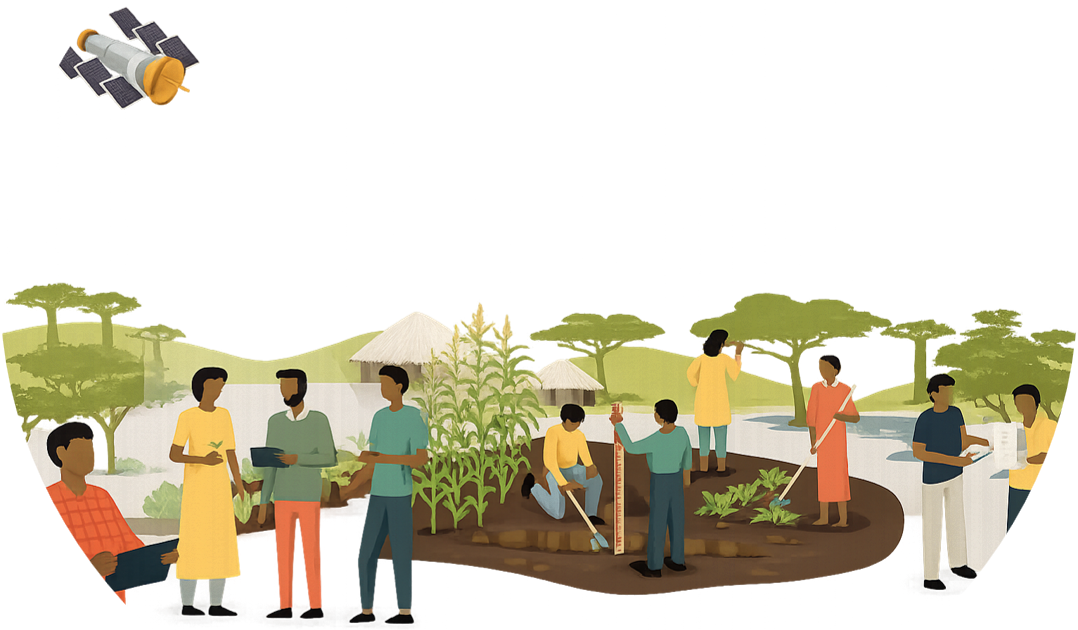
The K4GGWA Evidence Hub brings together the concepts, data, methods, research and practical tools used to develop and apply spatial evidence for restoration across the Great Green Wall.
Start with the foundations, explore the evidence ecosystem behind K4GGWA Platform’s spatial products, work directly with data, or browse research and workshop resources.
Explore the hub
Foundations modules
Build a practical understanding of spatial evidence and how it can support restoration decisions.
Explore the modules →Practicals gallery
Get hands-on with spatial datasets, tools and workflows through guided practical exercises.
Browse the practicals →K4GGWA Soil and Land Health Pipeline
Follow the pipeline from LDSF field data and laboratory analysis through modelling, products and the K4GGWA spatial data infrastructure.
Explore the ecosystem →Data & spatial products
Discover the GGW-wide analysis-ready spatial assets available through the K4GGWA STAC and how they can be used.
Explore the data →Papers & methods
Read the research, methods and further resources underpinning the evidence, datasets and approaches used across K4GGWA.
Browse research →Workshop resources
Access materials, notebooks and guidance from K4GGWA spatial data and capacity-building workshops.
Browse workshops →