The Great Green Wall (GGW) brings together an increasingly rich body of data on restoration activities, land health, climate, biodiversity and ecosystem change. Making effective use of this information means being able to access, analyse and interpret data and translate the results into evidence that can inform decisions.
This four-part online seminar series will help GGW practitioners and other restoration actors build practical skills in R for data analysis and spatial evidence. Through guided, hands-on exercises using real-world GGW data, participants will learn how to access and work with restoration information, explore spatial datasets, carry out simple analyses, and communicate findings.
The series aims to strengthen the ability of GGW actors to use data and spatial evidence to inform restoration planning, monitor activities and outcomes, identify patterns and priorities, and support more transparent, evidence-based decision-making.
About the seminar series
The series consists of four live, instructor-led online sessions, in English and French. Each session steps through a practical R notebook, with participants following along and running the code on their own computers. Moderators will be available throughout the sessions to respond to questions and help troubleshoot issues.
- Four practical sessions | 90 minutes each | Live online
- Bring your computer and follow along as we work through each notebook together
Register for the seminar series and join us for four practical sessions on using R and spatial data to support restoration decision-making in the Great Green Wall.
Each 90-minute session will combine:
- Guided practical (approximately 60 minutes): An instructor-led walkthrough of the notebook. Participants run the code themselves and work through each step.
- Parallel Q&A and troubleshooting: Moderators will support questions throughout the practical, helping participants resolve coding issues and understand the steps.
- Discussion and questions (approximately 30 minutes): Time at the end to discuss the methods, reflect on how they can be applied in participants’ own work, and raise outstanding questions.
Notebooks and relevant preparation materials will be shared ahead of each session. Participants will be encouraged to follow along, but can also use the sessions to observe, ask questions and build familiarity with the workflows.
Session topics
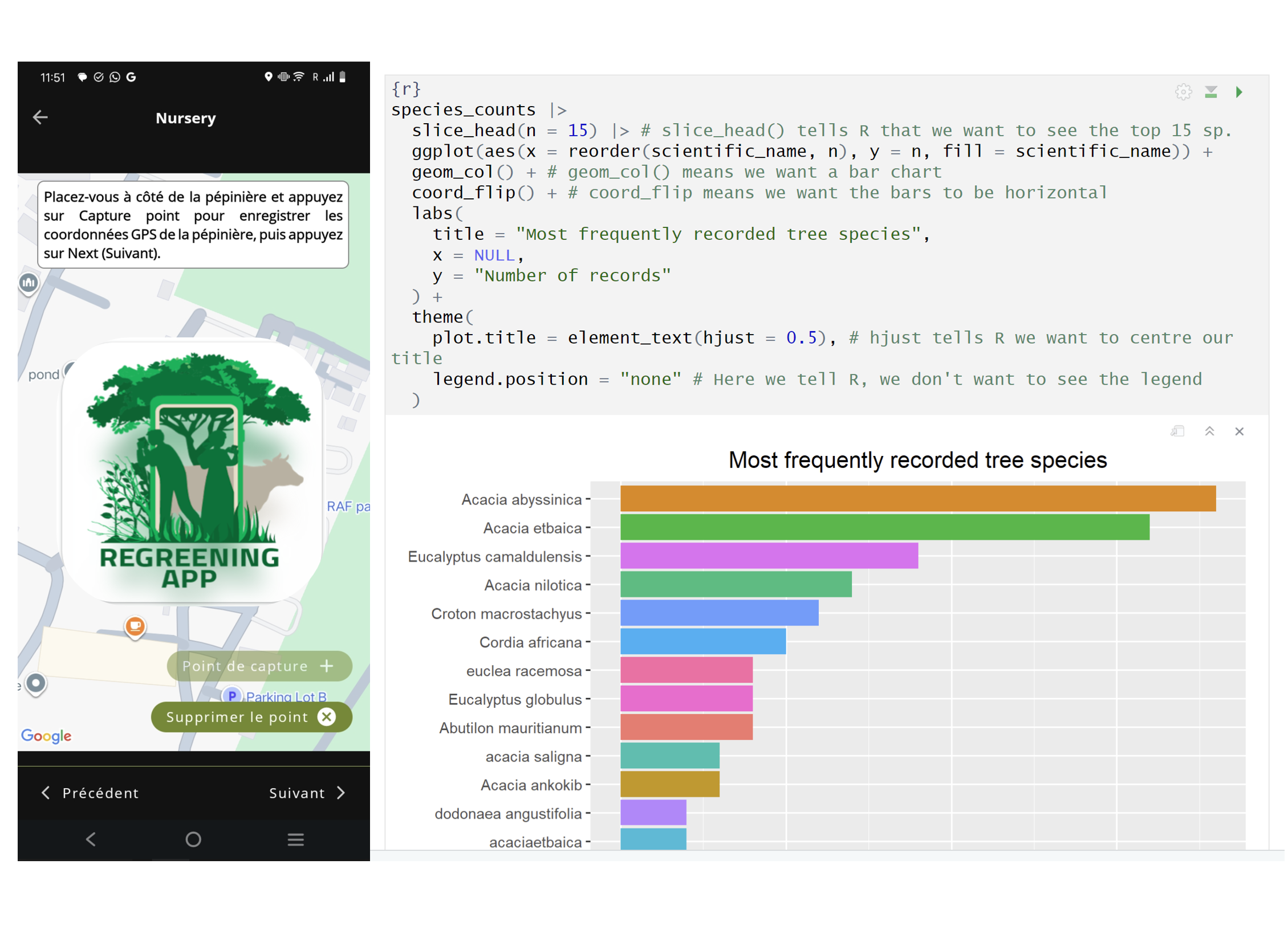
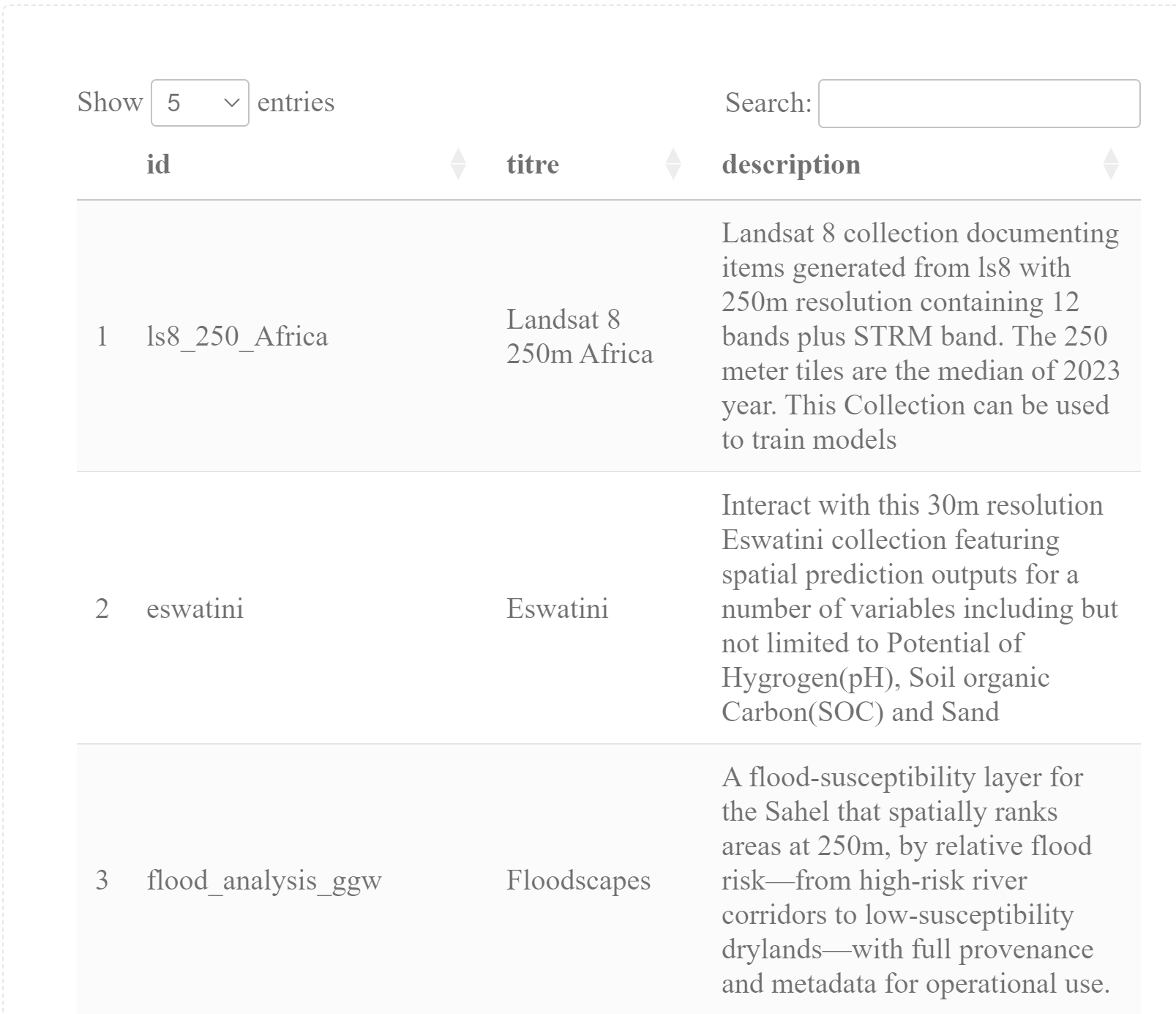
The online series will cover a variety of topics relevant to restoration monitoring and decision-making in the GGW, including: downloading and working with citizen-science data from the Regreening App, accessing, exploring and analysing different kinds of spatial datasets (climate, land health, biodiversity) for monitoring, reporting, and site targeting.
Sessions will include practical examples of using these workflows for GGW monitoring and reporting against GGW-Observatory Harmonised Results Management Framework, UNCCD LDN, and other international reporting frameworks.

Who should participate?
The series is intended for GGW practitioners, restoration program teams, monitoring and evaluation specialists, researchers, and others who work with restoration data or contribute to planning and decision-making.
Participants do not need programming or GIS experience. A willingness to learn and follow practical examples is enough. Some sessions may build on skills introduced earlier in the series, and any recommended preparation will be outlined on the relevant session page.
What you will take away
By the end of the series, participants will have practised how to:
- Access and download data from the Regreening App and other sources.
- Use R to explore, clean, summarise and visualise datasets.
- Find and work with spatial data relevant to the Great Green Wall.
- Explore relationships between restoration activities and environmental and climate data.
- Produce reproducible outputs, maps and reports that communicate findings.
- Implement spatial evidence in restoration planning, monitoring and decision-making.
Stay tuned
The first practical session is planned for December 2026. Dates and further details for Sessions 2-4 will be announced in early 2027.
We look forward to learning together and building practical skills for evidence-informed restoration across the Great Green Wall!